March is Colo-Rectal Awareness Month
The incidence of colorectal cancer in young adults is on the rise. If you are in your early 40s, you should be having a conversation with your primary doctor about when is the most appropriate time to do your first colonoscopy screening. This is especially important if you have a family history of colon, rectal or any other cancers. Your age, your family history, and any symptoms you might be having, will all determine when it is most appropriate for you to have your first screening.
I lost a 33-year-old brother-in-law, a brilliant physician, to stage 4 metastatic colon cancer. Even though he had mild gastrointestinal symptoms, no one ever ordered a colonoscopy for him at his age. That was 41 years ago. I imagine if he presented with similar symptoms today, they would’ve done a colonoscopy. It might not have changed the outcome of his illness, but we know that early detection and early treatment gives someone the best shot at survival. Especially when you’re 33 years old.
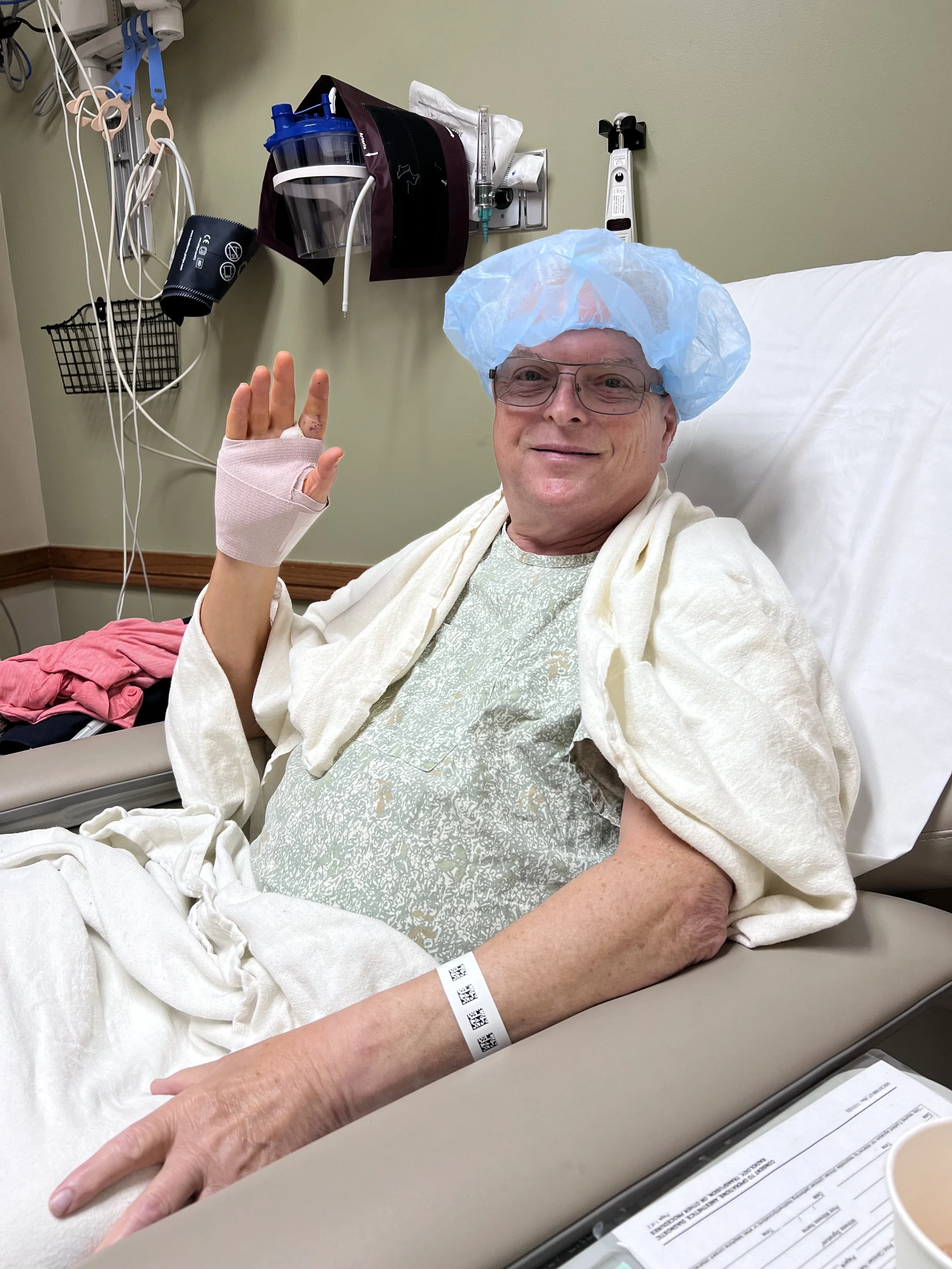
Many people put off doing colonoscopies because they’re afraid of pain during the procedure. I’m here to tell you firsthand that the procedure itself is pretty benign. The twilight sedation that they put you under is fantastic and you don’t feel any discomfort… and you don’t remember a thing.
Other people put off the procedure because they don’t want to have to do the prep, which has historically been the worst part of the procedure. Most recently, they have come up with a much better prep. So if your doctor wants to order a colonoscopy, you should have a conversation with him or her about the newer preps that are not quite as intensive as the more standard ones.
Some people put off the procedure because of the cost, especially if they don’t have health insurance. This is a valid challenge to having the procedure. Talk to your provider about this. There are lower costs for people without health insurance. Call the procedure facility billing department and have the conversation with them. Ask if you can pay it off as an out-of-pocket expense as you do t have health insurance.
Most health insurance companies will pay for a colonoscopy if it’s a diagnostic procedure versus just a screening procedure. A diagnostic procedure is one that is ordered because of symptoms that the patient is having. A screening colonoscopy is done based on age, family history.
Cancer is not a fun disease. I was diagnosed with lung cancer in 2024 and was very fortunate that it was caught early at Stage 1. I only needed surgery for treatment. I didn’t have to go through radiation or chemotherapy. It was caught incidentally on a Chest Xray that was ordered to see if I had pneumonia. Had I not had a bad cough, had I not gone to the urgent care center, had the doctor not ordered a diagnostic chest x-ray… I would still be walking around with lung cancer, two years later. Diagnosed at a later date increased the risk for my having a terminal illness.
I have a son who at age 32, was diagnosed with Stage 1 Hodgkin’s lymphoma, a blood cancer. Had he not had a enlarged lymph node, had he not had a primary care doctor that he saw regularly, had he not had a bad headache that required hospitalization … he’d also have been diagnosed later on, increasing his risk for terminal illness.
The whole point of my blog this month is to encourage you to check your bodies for lumps, bumps, and symptoms that should not be present and follow up with your healthcare provider, sooner rather than later. In addition, I’m encouraging you all to have conversations with your primary care provider about family history of illness, any symptoms you’re having, and the appropriate time for you to start cancer screening procedures.