
How to Partner With Your Healthcare Team to Get The Best Patient Outcomes
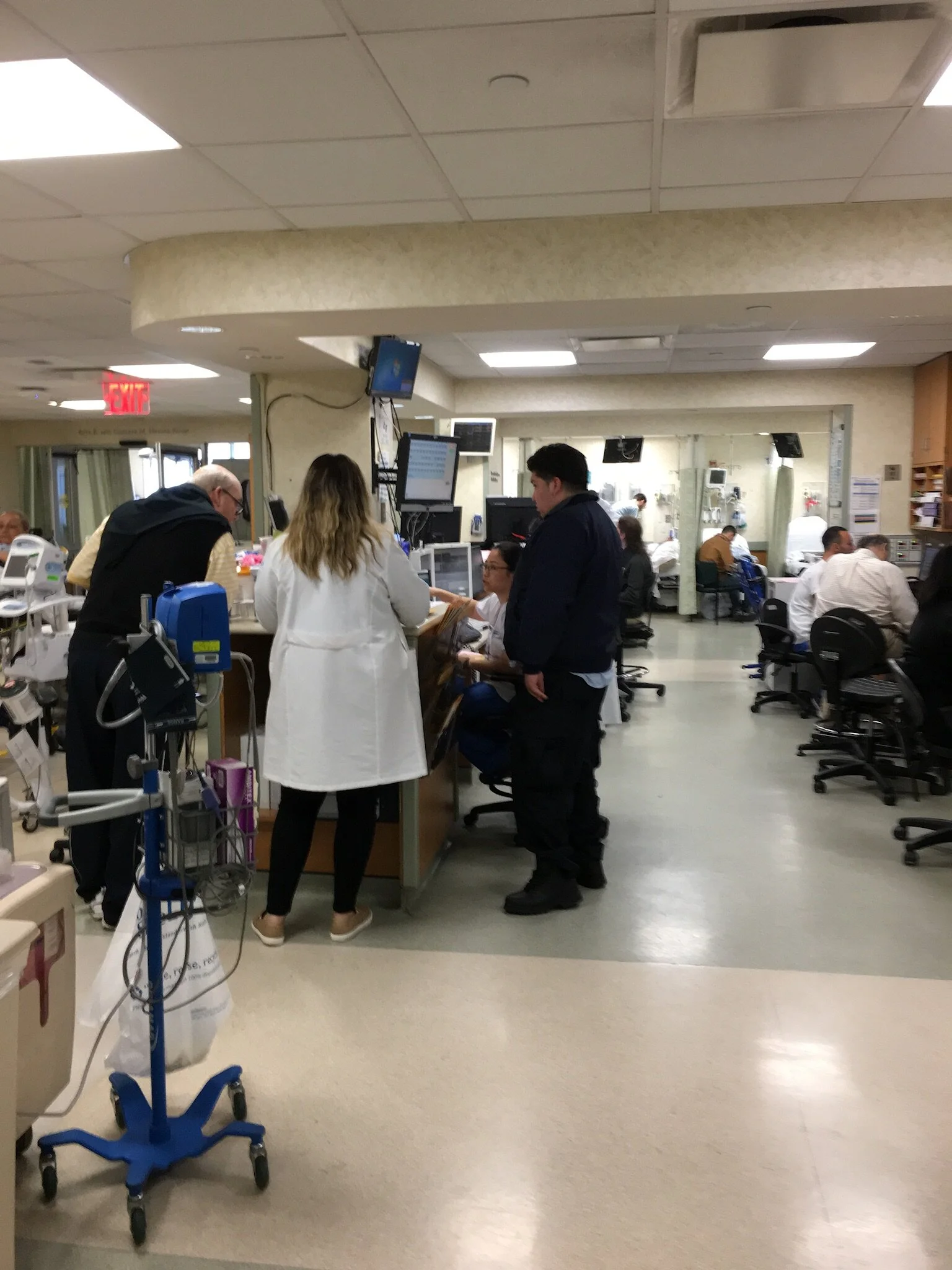
It is important for every patient to have a voice in the healthcare setting. Being an empowered patient will give you that voice. How do you become empowered? How do you become an advocate for yourself or loved one? While it does help, having a medical or nursing background is not essential in order to be an empowered patient or advocate. The key to success does, however, have a lot to do with your communication skills. When I was a young nurse, I could tell a doctor to “go jump in the lake” and he would walk away smiling; while a colleague might have said the same thing to that same doctor and he would turn around and report her to the nurse manager. It’s not what you say, it’s how you say it that matters. Communication is the key to any successful relationship. How you speak. How you make eye contact. How you smile. The tone of your voice. Your body language. These factors show others just what you’re truly feeling.
When you are advocating for yourself or someone you care about, it is essential to be pleasant and non-hostile, regardless what you’re feeling on the inside. You will turn people off if you are nasty, if you have a chip on your shoulder, if you are accusatory, if you are demanding, if you are non-forgiving. We’re all human. We all have feelings. We all make mistakes. We all want what’s best for the patient. In my forty-six year career, I can unequivocally state that every doctor or nurse I worked with had the patient’s best interest at heart. Caring for and about patients is what we do. No one goes into medicine or nursing for the glory. It’s too hard a job for that, both emotionally and physically. We go into the field for altruistic and well-intentioned motives. We want our patients to get well. We want our patients to have the best healthcare outcomes possible. We want our patients to have a good patient experience. We want our patients to survive… and thrive. Sometimes, there are challenges to the achievement of those goals which are beyond our control. Those challenges can be due to the bureaucracy of the healthcare system itself, the patient’s condition, diagnostic information that doesn’t confirm a diagnosis, or the patient having a difficult time being compliant with the medical plan of care.
One of my personality strengths is creating interpersonal relationships with others. I was able to use that strength in creating great relationships with members of my critically ill son’s healthcare team. Consistently… even when there were individual issues. Nurse James Washington, Assistant Nurse Manager on the Oncology Unit, only took care of My son for one out of the 94 nursing shifts that he experienced during his hospitalization. Yet, James and I still keep in touch, frequently sending each other I love you texts and emails. These are the kinds of relationships I am talking about.
I learned early on in life that you get a lot more with sugar than with salt. Learning how to communicate openly, honestly, and respectfully is a gift that not everyone enjoys. It is hard to be respectful when the other person is being rude. It is hard to be honest when the other person is defensive. It is hard to be open when the other person is closed. But when you are advocating for yourself or someone you love, you need to get your questions asked, your concerns addressed and the patient’s voice heard. You owe it to yourself and to the loved one you are advocating for. If that is not happening, you need to have an honest conversation with the person you are trying to communicate with and let them know in a non-defensive and non-threatening manner, that your goal is to partner with the healthcare team in a positive way to make sure the patient has the best healthcare outcome possible. Then ask the other person how you and s/he can make that happen moving forward.
Being a patient is scary and anxiety-producing. Patients and families worry about the diagnosis, the treatment, the prognosis, the cost, the length of recovery, pain, disability. Included in those illness-related worries comes the home-based concerns: child or pet care issues, mail issues, bill paying issues, house issues, spousal issues, etc. Each one of these issues needs to be addressed in order for the patient to have the physical and emotional strength to focus on wellness, rather than illness. Social Workers, Case Managers and/or Discharge Planning Nurses will help you cope with the discharge related issues. Your healthcare team should help you cope with the illness-related issues while you are hospitalized.
You must ask questions. You must write them down so when your healthcare team makes bedside rounds, you are prepared to ask them. Be sure to get your questions answered. Be sure to write down the answers. Ask for spelling, clarification, written handouts. Tell them when you don’t understand something or when you are uncomfortable with the answers. If you do lose your voice, ask your doctors if they will call your family or advocate to share the information. If your advocate misses the medical bedside rounds, ask the doctor for a contact phone number so your advocate can call him or her. If you know how to use FaceTime on your iPhone, ask the doctor if you can FaceTime with your advocate during the bedside rounds so they can be part of the meeting. Feel comfortable asking your doctor “What else should I be asking? There’s so much I don’t know or understand”.
Google medical information so you have a basic understanding of your condition. Your doctor welcomes an educated healthcare consumer. But always remember that you need to trust your doctor as s/he is the one with the medical degree and all the clinical expertise. Exchange of information is good. It enlightens you. It clarifies things for you. It gives you the relevant information you need in order to part of the decision-making process.
Journalizing is a great way to keep all of your medical info in one place. Ask someone to buy you a notebook for such purpose. Use this notebook to document all of your questions and answers, your abnormal lab values, diagnostic findings, drugs and side effects and other relevant information. You can log your visitors and any gifts they bring. You can tape each business card you receive from individual members of your healthcare team into the notebook for easy, organized access as needed. You can write down your fears, your thoughts, what you’re grateful for. What you’re upset about. Include dates for each entry. When you’re discharged, bring it to every doctor appointment with you. It will ensure that you have all of the information you might need at your fingertips. It will ensure continuity of a care when you visit multiple doctors.
It has always been important to me to be able to communicate with my personal doctors. I always ask them how I can do that. Sometimes they give me their private or work email, their cell phone number, their fax number. On one occasion my doctor even gave me his home number. The same holds true for the new doctors that you may be assigned to as a hospitalized patient. Ask them how you can contact them. Once again, tape any business cards they give you into your notebook.
In the face of serious illness, do not be afraid to ask your doctors about getting a second opinion. When my son was so sick, we went to Memorial Sloan Kettering Cancer Center for that second opinion. Our Lenox Hill doctors welcomed that. My son’s health insurance company paid for that. It wasn’t that we didn’t trust our Lenox Hill team. We just wanted a second opinion. The doctors at MSKCC were fantastic and they recommended the same treatment that our Lenox Hill doctors recommended. It was an easy decision for us to stay at Lenox Hill with the team that we had already established a relationship with. The dilemma comes when the second opinion is totally different from the first one. What does one do? A third opinion might be helpful, but traversing the globe for the perfect fix is not advisable. It is too exhausting, too expensive and a waste of too much precious time that could be spent in treatment. Miracle fixes don’t really exist. At some point, you will have to put your trust in one doctor and move forward - sooner, rather than later.
Depending on what service you are admitted to (such as orthopedics, obstetrics, neurology, medicine, surgery, etc), will determine who your assigned doctors will be. Even if you have a personal doctor, you will probably have a team of hospital assigned healthcare providers taking care of you, especially if you are admitted to a teaching hospital with resident doctors, fellows, physician assistants, and medical students. During a recent out-patient surgical procedure in a NYC hospital, my son was visited and interviewed pre-operatively by seven members of the healthcare team, including a nursing assistant, pre-op nurse, Operating Room Nurse, Nurse Anesthetist, Medical Anesthesiologist, Head Surgeon and Senior Medical Resident. They all asked the same questions, we shared the same information. It makes you question the need for such redundancy. I can absolutely guarantee you that it is to make sure the patient has the best possible surgical outcome with minimum risk.
When I advocated for son, my goal was to partner with his healthcare team in a positive way to make sure he achieved the best healthcare outcomes possible. I was respectful. I was open. I was transparent. I asked questions. I listened to the answers. I asked for explanations and clarification. I laughed. I cried. I was non-judgmental. I followed the rules. I was assertive, but not aggressive. I expressed my thoughts and my feelings. I tried to be pleasant. I tried very hard not to over-step my boundaries, playing the role of mother and leaving the nursing to the nurses. My intentions were never doubted. My presence at my son’s bedside twenty-four hours each day, seven days per week, for forty-seven days of hospitalization that included ninety-six nursing shifts, was never challenged. Our collective partnership with the healthcare team provided him with the best medical and nursing care imaginable and the best outcome of all - his life!
The only way you can advocate for your loved one is to be there for them for as long as it takes. When the patient or patient advocate partners with the healthcare team in a positive manner, you can expect open, transparent communication. You participate in the decision-making. You experience greater satisfaction with the care. The patient is more compliant with the medical care plan. The patient usually, but not always, enjoys better outcomes and shorter hospital stays. Everybody is satisfied. It’s a win-win for everyone. The fact that Jordan’s healthcare team embraced both him and our family is testament to the very positive outcomes of relationship building.
My son had many doctors on his healthcare team. The team was led by his life-saving neurologist, Dr. Souhel Najjar, who directed the care. No decisions were made without Dr. Najjar’s approval. His medical care team included a Neurologist, NeuroSurgeon, Neuro-Oncologist, Neuro-Opthamologist, Medical Oncologist, Radiation Oncologist, Dermatologist, Urologist, Nephrologist, Palliative Care and Infectious Disease doctors. His healthcare team also included nurses, nurse practitioners, infusion specialists, phlebotomists, nutritionists, massage therapist, music therapist, pet therapists, chaplains, pharmacists and the fabulous Patient -Customer Experience Department, led by the most wonderful Joe Leggio. I would be extremely remiss if I didn’t laud the value and input of all Lenox Hill ancillary workers, including dietary aides, transport personnel, housekeeping staff, security guards, volunteers, and so many unnamed others who contributed to my son’s well-being and fantastic patient experience.
As medicine is getting more and more complex, it is so important for patients to advocate for themselves and for loved ones and friends to advocate on their behalf when necessary. This level of involvement can educate and empower the patient and family as well provide novel treatment options and prevent medical errors and oversights.
John Boockvar, MD, Vice Chairman, Lenox Hill Hospital, Prof of Neurosurgery Hofstra Northwell School of Medicine