
Easing the Transition When Your Loved One Has to Move Into An Alternative Senior Community
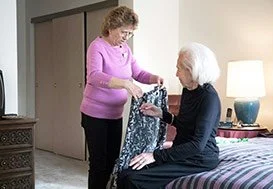
As you can well imagine, when a person leaves his or her home and independence behind for the rest of their life, this involves a tremendous amount of loss. Expect this to be a time of intense emotion, both for you and your loved one. Your loved one may respond with anger, depression, and/or aggression. You may feel deep guilt and depression. While these are enormously trying feelings, they are natural reactions to a dramatic upheaval. Most often, they will pass, unless your loved one suffers with dementia in which case he or she might ask to go home indefinitely . To make sure these reactions pass in a positive way, plan on helping your loved one cope with that loss. This task will be extremely challenging but well worth the effort. Be honest about what is happening. If not, you run the risk of destroying the trust you have built over the years.
Helping your loved one say goodbye to his or her home can be enormously beneficial. This can be done through some type of ritual or gathering to mark the moment. Allow your loved one to supervise decisions about what to take, what to give away, and to whom things should be given.
Make sure your loved one brings treasured mementos to the facility. S/he may not be able to bring furniture, but photos of loved ones and friends are welcome and comforting items to have around. During the last stage of life, material things become insignificant as interpersonal relationships take on a priority role in one’s life. Celebrate those relationships. Encourage them. Maintain them.
Bring objects that reflect something about who your loved one has been. Bring photos of him or her taken during earlier stages of life. Mark the arrival of the “new” home with a cultural or religious ritual, such as putting a mezuzzah on the door for people of the Jewish faith.
Visiting your loved one regularly boosts his or her spirits and re-assures the individual that they have not been forgotten. Find things to do together with your loved one that s/he particularly enjoys, such as going outside to enjoy fresh air, sharing news about the family, reading poetry, or participating in a facility activity. If permitted, take your loved one out of the facility for a few hours for some recreation and diversion.
Share meals with them in the dining room. Model behaviors for them that show them how easy it is to engage with others.
Encourage your loved one to build relationships with the people in their new “home” and to have worthwhile experiences. Encourage them to participate in the activities that are offered at the home. Accompany them to those activities. Make it a fun time for both of you.
Provide your loved one with the means to listen to favorite music.
Help your loved one find meaning in their daily life even though they may be suffering. Encourage them to do something nice for someone else. Encourage them to say a kind word to someone else. Let them know how much they can grow and change by interacting with others and by participating in activities. Have the grandkids call and facetime/skype with them over the phone. If you have the knowledge, skype/FaceTime with family members who live far away while you are visiting. Ask the staff if they can facilitate this in your absence.
Helping your loved one reminisce about days gone by is an extremely effective tool for overcoming depression, loss and isolation. Bring family relics and photo albums to facilitate such reminiscence.
You can be extremely helpful to your loved one by forging a positive alliance with the facility’s staff. Acknowledge the positive things the staff members do directly to them and to their supervisors. Get the staff to appreciate what is special about your loved one by telling them about his or her past accomplishments and strengths.
Be aware that residents in facilities who have visitors tend to get more attention and care than those who don’t. Be prepared to make sure loved one receives regular visits from loved ones, friends and members of his or her faith community.
Be sure to inform the staff of your loved ones specific needs. Communicate any concerns you might have about your loved one’s care with respect and tact. If you have a serious concern that has not been addressed after sharing it with the staff, you will need to be an advocate for your loved one. You can do so by bringing your concerns to the facility social worker or administrator. If this doesn’t bring the desired outcome, call the nursing home ombudsman, who is a federally-funded advocate, through your local Area Agency on Aging. These agencies are federally-mandated regional agencies that coordinate aging services and dispense federal funds. Call your State Department of Aging or look in the government section of your phone book to find the Area Agency of Aging closest to you.
When a loved one has to leave their home, this takes its toll on every member of the family. But you cannot be an advocate for your loved one if you are stressed out, exhausted, and neglecting other responsibilities in order to constantly be by your loved one’s side. The best way you can help your loved one is by taking good care of yourself. Consider reaching out to a support group at a synagogue or Jewish Family Services. Seek counseling from your clergy or therapist. Nurture yourself by spending quality time with family and friends, spending time by yourself, and/or pampering yourself with something that gives you pleasure and comfort.
Remember, entering an alternative senior community does not have to be the “end of the line”. Life can go on in a very positive manner as family and friends find ways to enrich their loved one’s new life. Consider it the next exciting chapter of your loved one’s life. A new beginning… not the end.